Route planning
Use route planning to improve visibility, coordination and review within the relevant operation.
Solutions
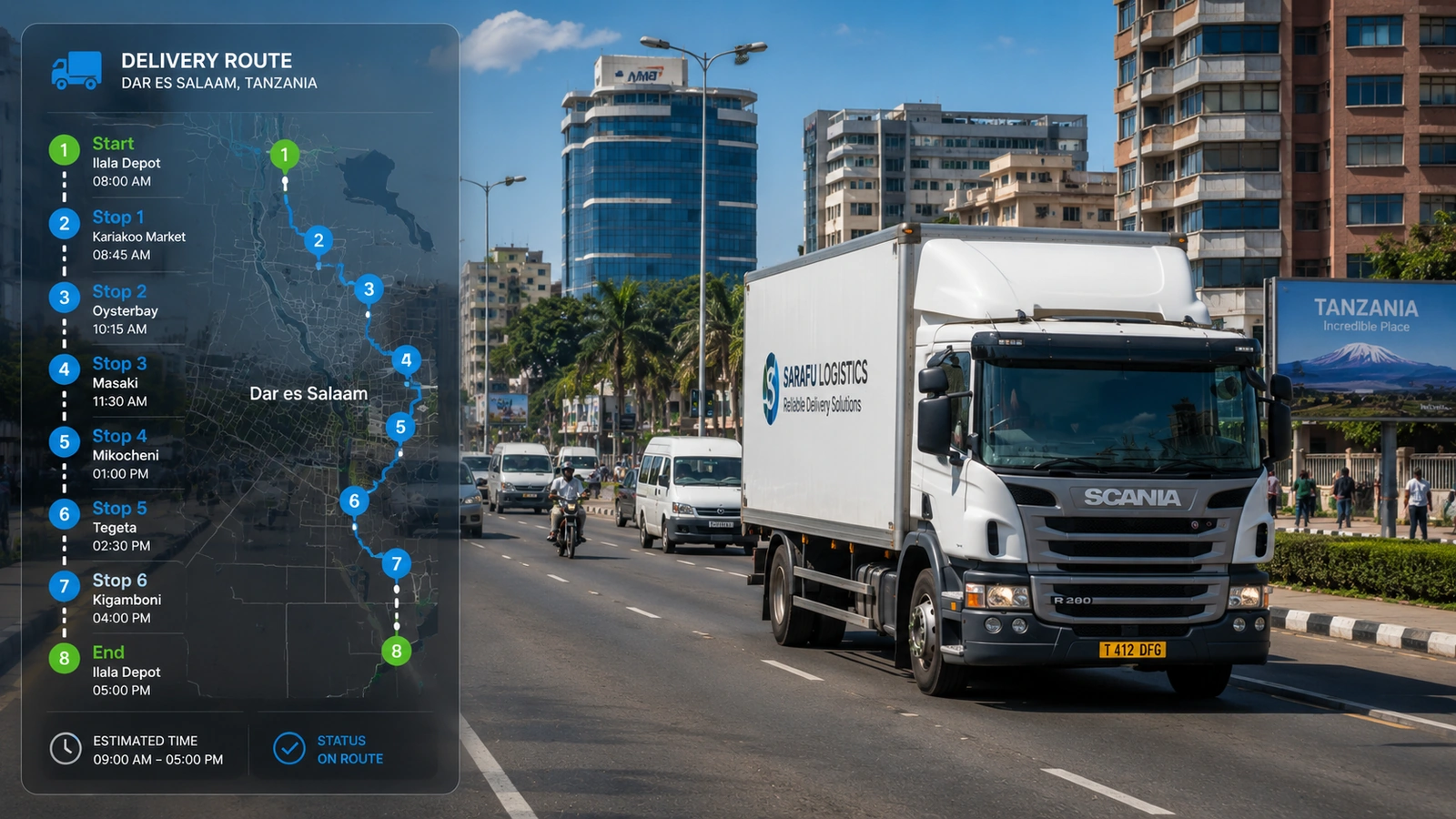
Inefficient routes waste fuel, time and delivery capacity. Omtrack route planning software Tanzania helps teams plan practical journeys, monitor progress and adapt quickly when conditions change.
route planning software Tanzania
Visibility that supports action Mobile and desktop access • Local installation supportVehicles we support
Omtrack GPS tracking works with a wide range of cars, buses, trucks and special-purpose vehicles from different brands.


Compatibility and available features depend on the vehicle model, tracking device and installation assessment.
A clearer operational view
Route optimization software helps a business decide how vehicles should complete assigned stops and journeys.
It brings together information such as:
The goal is to create a practical route that reduces unnecessary travel while helping drivers complete their assignments on time.
Route optimization is not always about choosing the shortest distance. The best route may also depend on vehicle type, customer requirements, delivery times, road conditions and operating priorities.
Manual route planning may work when a company has a few vehicles and stops. As daily activity grows, dispatchers may struggle to coordinate everything effectively.
Common challenges include:
Route optimization software gives the operations team a clearer way to organise daily assignments.
The operational challenge
The order in which drivers visit customers can make a big difference.
A poorly arranged route may force a driver to travel back and forth between the same areas.
Route optimization software helps organise stops in a more practical sequence.
This can help your company:
The dispatcher can still adjust the order when a customer has a special requirement or a local condition makes another sequence more suitable.
Not every vehicle is suitable for every assignment.
The dispatcher may need to consider:
Omtrack helps the operations team see which vehicles are available and where they are located.
This makes it easier to choose a suitable vehicle instead of automatically assigning the same unit to every new job.
When an urgent assignment comes in, the operations team can check the live map and identify vehicles operating nearby.
The nearest vehicle may not always be the best choice. It may already have several stops, lack the required capacity or be due for maintenance.
The system provides useful information, while the dispatcher decides which vehicle is most suitable.
Planning a route is only the first step. The operations team must also understand how the journey is progressing.
Omtrack helps managers monitor:
This allows the company to notice delays earlier and decide whether the customer, driver or another team member needs an update.
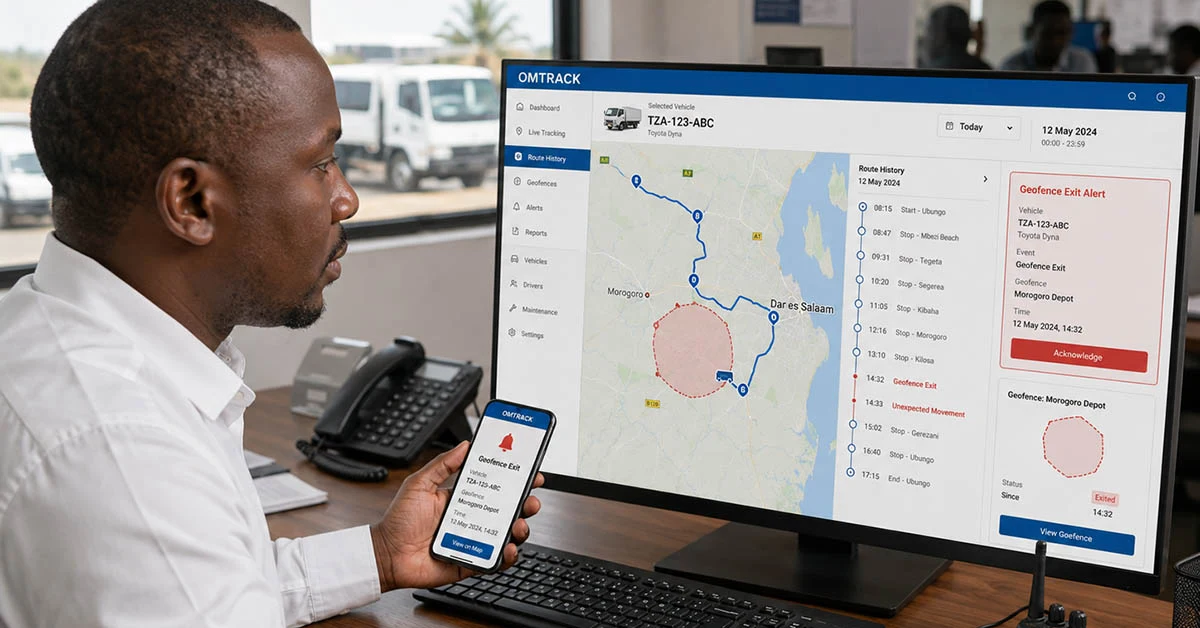
A route-deviation alert can notify the operations team when a vehicle leaves an approved route or operating area.
Unexpected route changes may happen because of:
An alert should not automatically be treated as misconduct.
The manager should check the available information and speak with the driver to understand what happened.
Geofencing allows the company to create virtual boundaries around important locations.
Geofences may be created around:
The system can notify authorised users when a vehicle enters or leaves a geofenced area.
This helps managers follow arrivals and departures without watching every vehicle continuously.
Unnecessary travel, poor stop sequencing and excessive idling can increase fuel usage.
Route optimization can help reduce avoidable distance and improve vehicle assignments.
Managers can also review route information together with:
The software provides information that may help the company identify inefficient patterns. Actual fuel savings depend on how the business applies that information.
Drivers work more effectively when they receive clear routes and assignments.
A planned route can help drivers understand:
This reduces confusion and unnecessary calls between the driver and office.
Driver productivity should not be measured only by the number of stops completed. Road conditions, safety, loading time and customer requirements must also be considered.
Customers want to know when a delivery or service vehicle may arrive.
With route and tracking information, the operations team can check vehicle progress before responding.
This helps the company:
Arrival times should be treated as estimates because road and operating conditions can change.
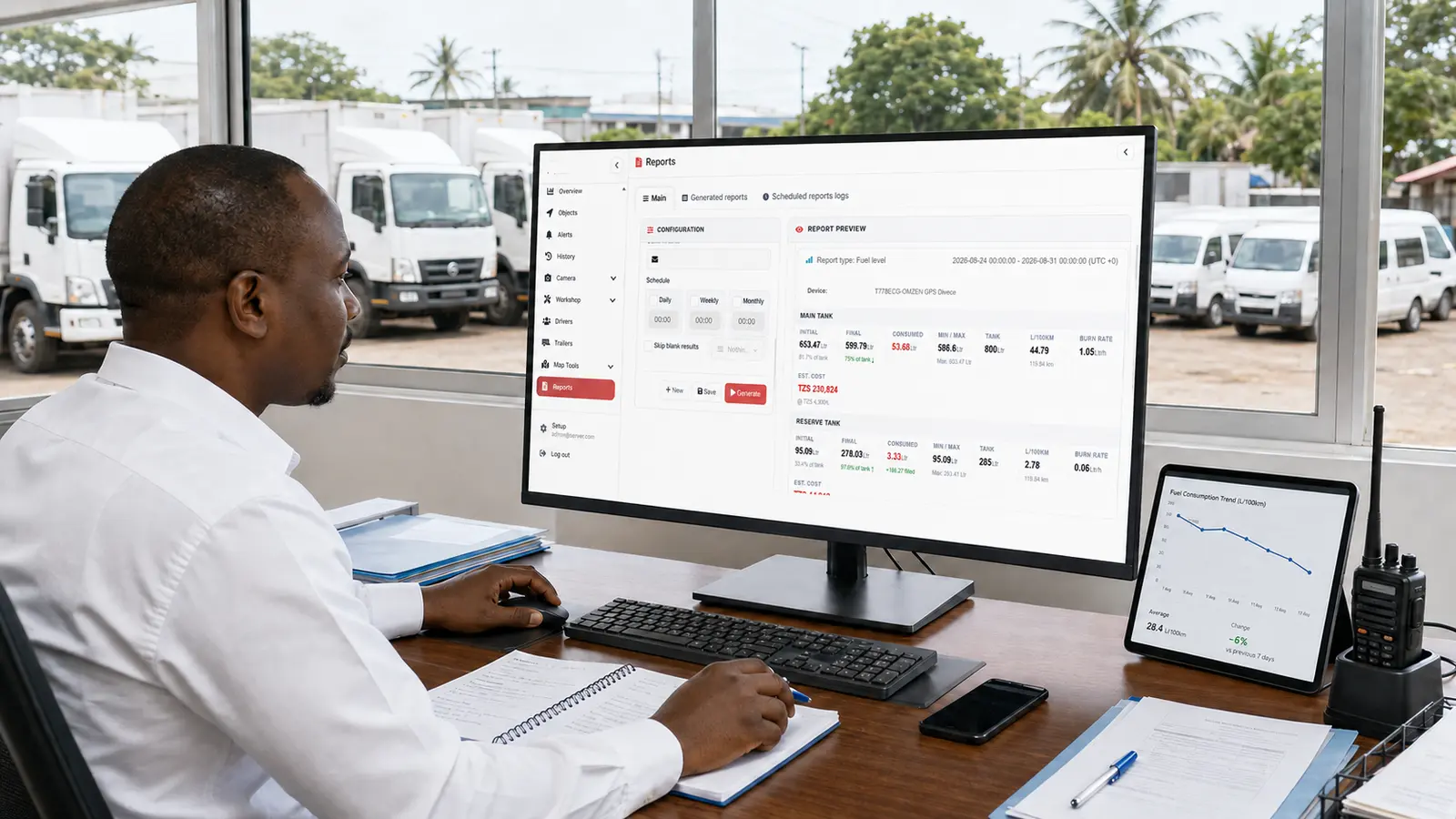
Omtrack records available trip and route information for later review.
Managers may be able to compare:
This helps the company understand which routes work well and which need improvement.
Practical capabilities
Use route planning to improve visibility, coordination and review within the relevant operation.
Use stop sequencing to improve visibility, coordination and review within the relevant operation.
Use vehicle assignment to improve visibility, coordination and review within the relevant operation.
Use progress visibility to improve visibility, coordination and review within the relevant operation.
Use route history to improve visibility, coordination and review within the relevant operation.
Use exception management to improve visibility, coordination and review within the relevant operation.
From information to action
When you can see what is happening, it becomes easier to act. Managers can check progress, look into a delay and assign the next vehicle using current information. This is especially helpful when vehicles are spread across different routes, towns or project sites and nobody in the office can watch every journey directly.
Clear records can also make accountability less stressful. Instead of arguing over memory, a manager and driver can look at the same route or alert. Over time, reports may show repeated delays, long idle periods, vehicles that are rarely used or routes that need attention. Omtrack gives you the information; your team keeps control of the final decision.
Local understanding
Omtrack combines GPS tracking with practical fleet and logistics tools for delivery, service and transport teams that need to plan practical routes and respond to changing daily conditions.
It is designed around the way businesses operate in Tanzania, including different vehicle types, mobile access and the need to speak with a local support team when help is needed.
You can start with the features that matter now and add more as your operation grows.
We want the system to feel useful, not technical for the sake of it.
Professional installation, a clear dashboard and guided onboarding help your team get comfortable with the platform.
Software cannot fix every business challenge on its own, but the right information can make supervision, planning and customer updates much easier.
A practical example
The operations team enters or imports information about the vehicles, available drivers and locations to be visited.
Each stop may include details such as:
The system helps the dispatcher organise stops into a practical route.
Depending on the selected features, the route may consider:
The dispatcher can review the suggested plan and make changes when necessary.
The route is assigned to a suitable vehicle and driver.
Drivers should receive clear information about their stops, priorities and any special instructions.
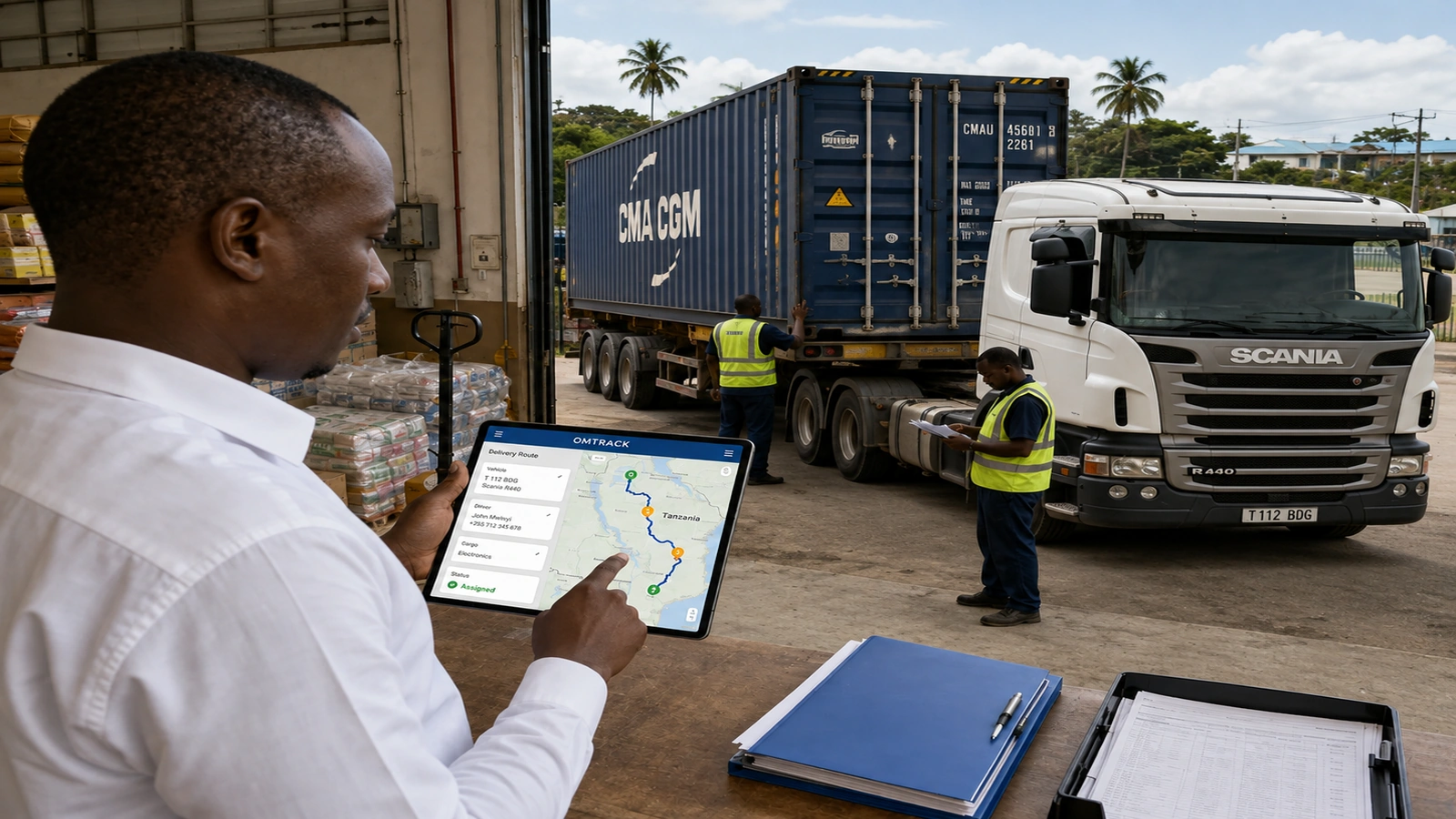
Once the journey starts, the operations team can use GPS tracking to monitor the vehicle’s progress.
Managers can check:
Daily operations do not always go according to plan.
A new customer request, vehicle problem, road closure or unexpected delay may require the route to change.
The dispatcher can check available vehicles and decide how to reassign work.
After the journey, managers can compare the planned route with what actually happened.
This helps the business identify repeated delays, unnecessary distance and stops that need better planning.
Customer perspective
 TBS
TBS LATRA
LATRA Tanzania Police
 TRA
TRA SUMATRA
 WMA
WMAHelpful answers
It is a good fit for delivery, service and transport teams that need to plan practical routes and respond to changing daily conditions. Your best setup will depend on how many vehicles you have, where they travel and what your team wants to improve. During a demo, we can talk through those needs and show you the most relevant features.
Yes, mobile access is an important part of the Omtrack experience. Authorised users can check relevant vehicle information and alerts while away from the office. The exact tools you can access will depend on your package and the permissions given to each user.
Yes. Omtrack can support a small fleet and grow with you. Your starting setup should match the number and type of vehicles you have, the alerts you need and whether you also want tools such as fuel monitoring, driver monitoring or dispatch management.
Reports can show vehicle movement, trips, stops, alerts and other information recorded by your chosen setup. The details depend on the devices and software features included. During a demo, we can show you the reports that make the most sense for your operation.
Request a demo or quotation and tell us how many vehicles you have, the vehicle types, where you operate and which features matter to you. Omtrack can then suggest a suitable setup and explain the device, installation, software and support costs clearly.
A clearer fleet starts here
Want to see how route planning software Tanzania could work for your business? Book a personalised Omtrack demo. We will look at your vehicles, your daily workflow and the features that matter most to you. You can also contact the Omtrack team by phone or email using the details provided on this website.